Nineteen species worth the trip.
Sizes are what we actually see, not records from elsewhere. Seasons are honest — some of these are a lottery and we say so.
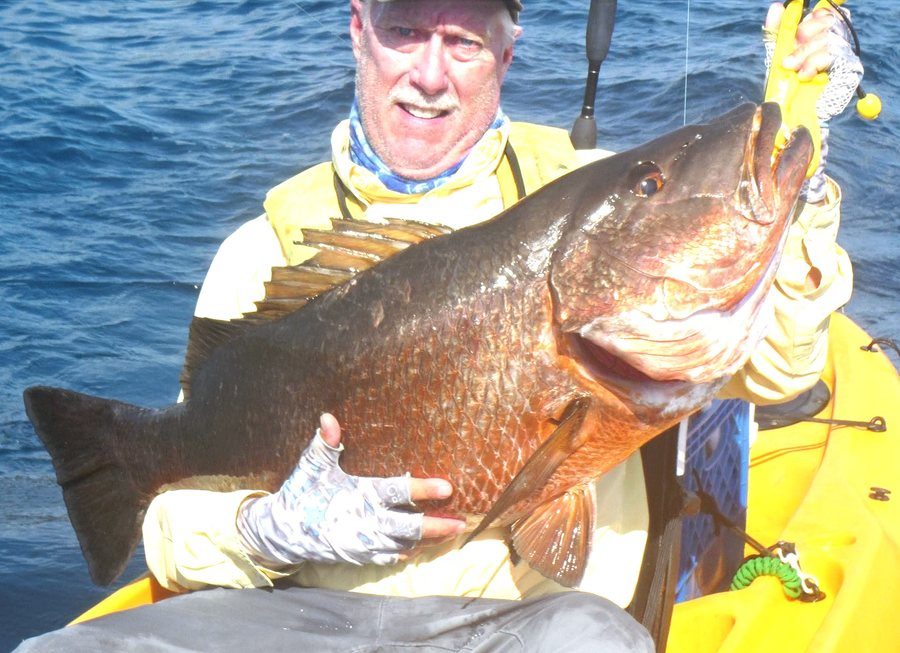
Cubera Snapper
The one most hardcore anglers put at the top, and the hardest thing on this coast to land from a kayak. They fight dirty and run straight for the structure. This ground gives you a real shot — but keep the drag tight, because any weakness in the tackle is the weakness they will find.
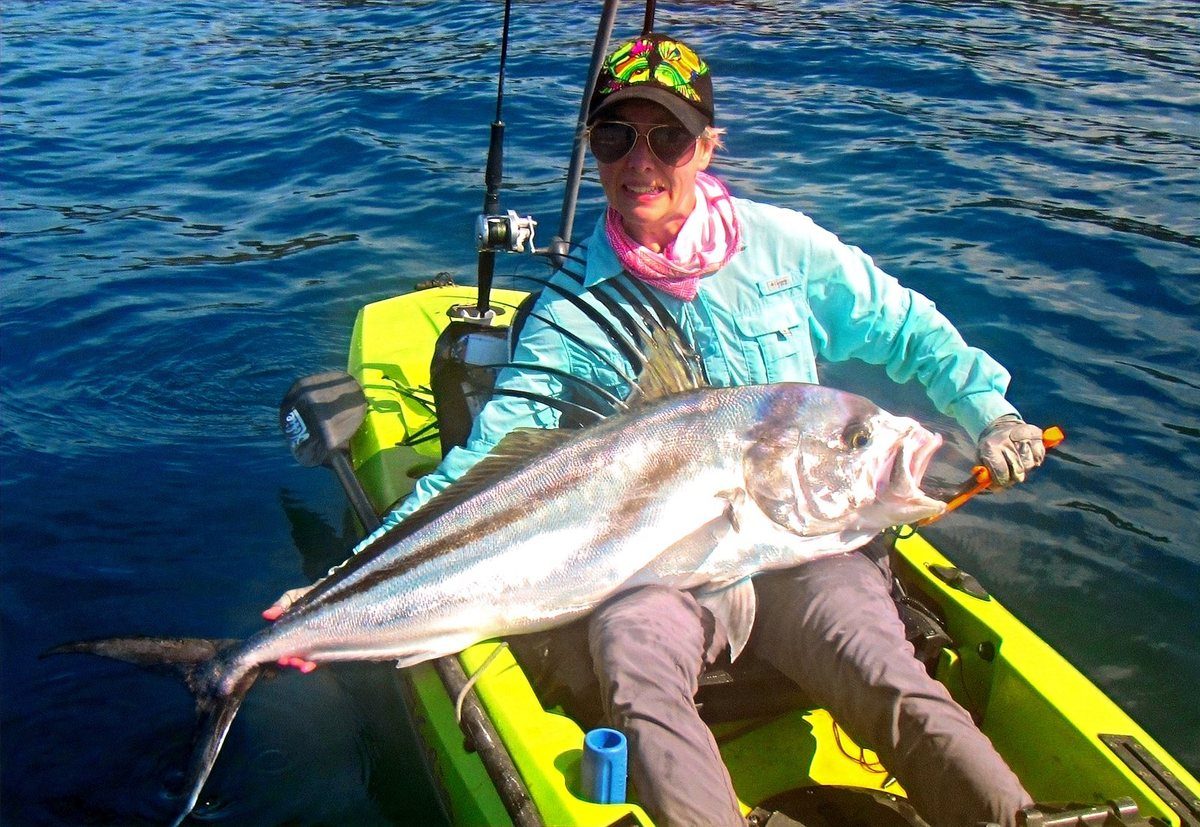
Roosterfish
The bread and butter of this lodge, and abundant. Smaller fish hunt in packs and give constant sport; the big ones are solitary and give you a fight you will still be describing years later. This coast is one of the places where they show up most consistently.
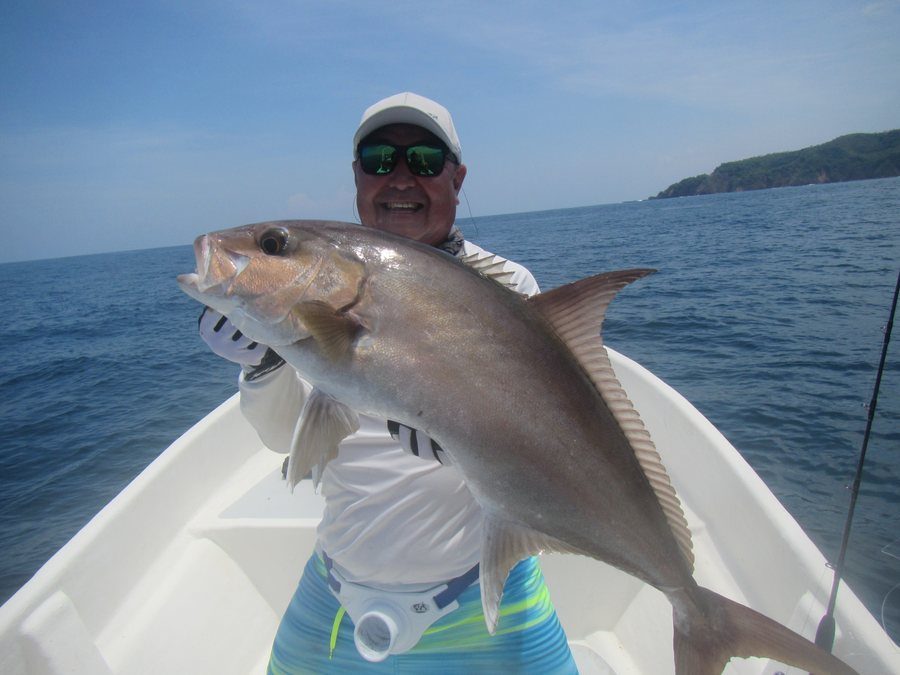
Amberjack
Three species present, holding in big schools on the deeper offshore reef marks. Immensely powerful on jigging tackle and, like the cubera, entirely committed to getting back to the reef and breaking you.
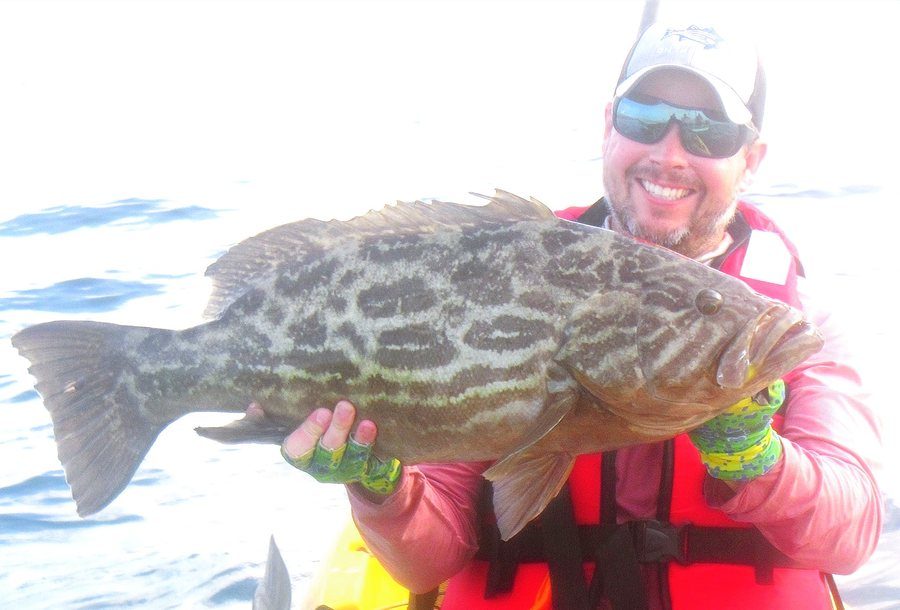
Grouper
Several species here; two matter. Goliath grouper exceed 500 lb, broomtail top out near 100 lb. That fish of this class are resident says more about the health of the ecosystem than anything we could write.
Billfish
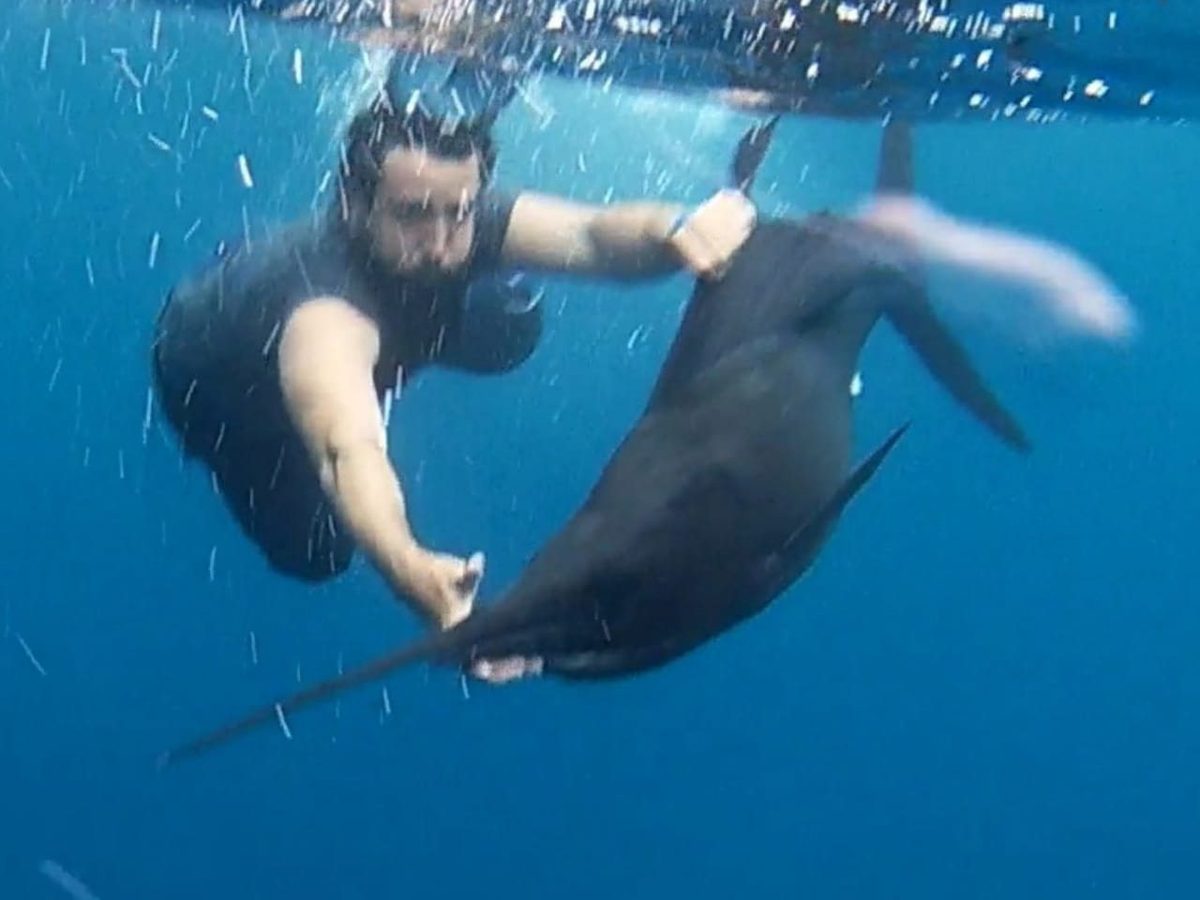
The migration route runs past us, under two miles from the 1,000 fathom line. They come right inshore — we have seen them within a few hundred metres of the rocks, and they have attacked small tuna already hooked. A viable kayak target if you want it.
Tuna
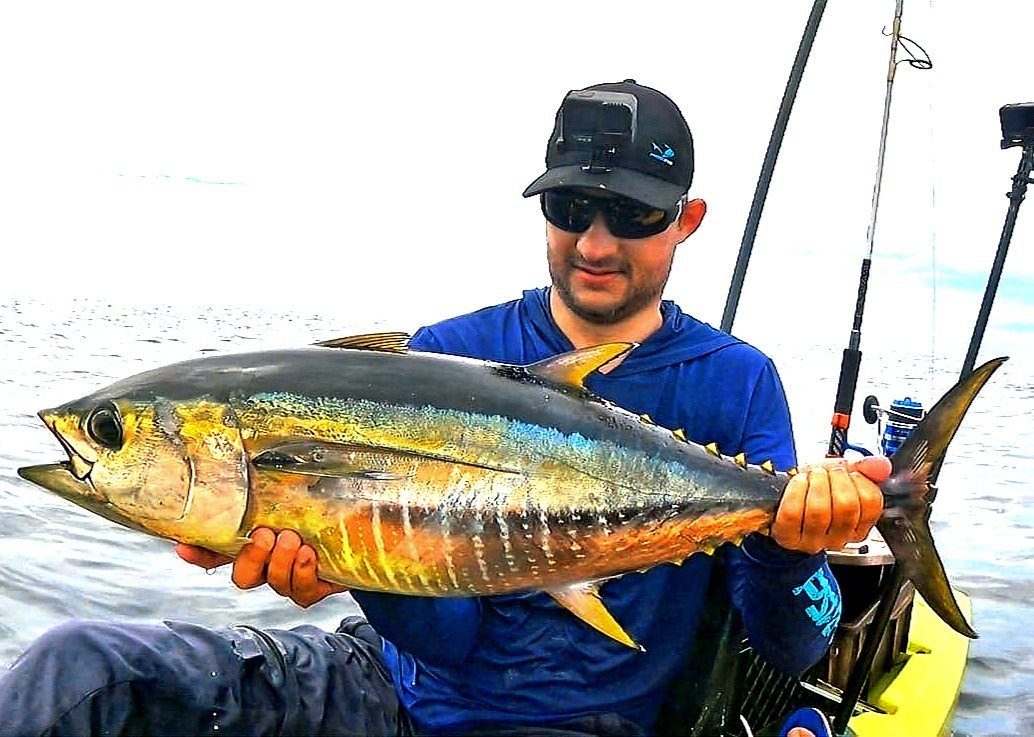
Shoals hold along this coastline and are the reason the rest of the food chain is here. Being towed by a yellowfin from a kayak, with a thousand metres of water under you, is the single experience this place is built around.
Wahoo
The speed demon, and a genuinely difficult fish from a kayak. They turn up anywhere, any time of year. Often visible cruising just under the surface — if you can put a diving lure across the path and rip it back at full speed, you are in with a shout.
Mahi Mahi
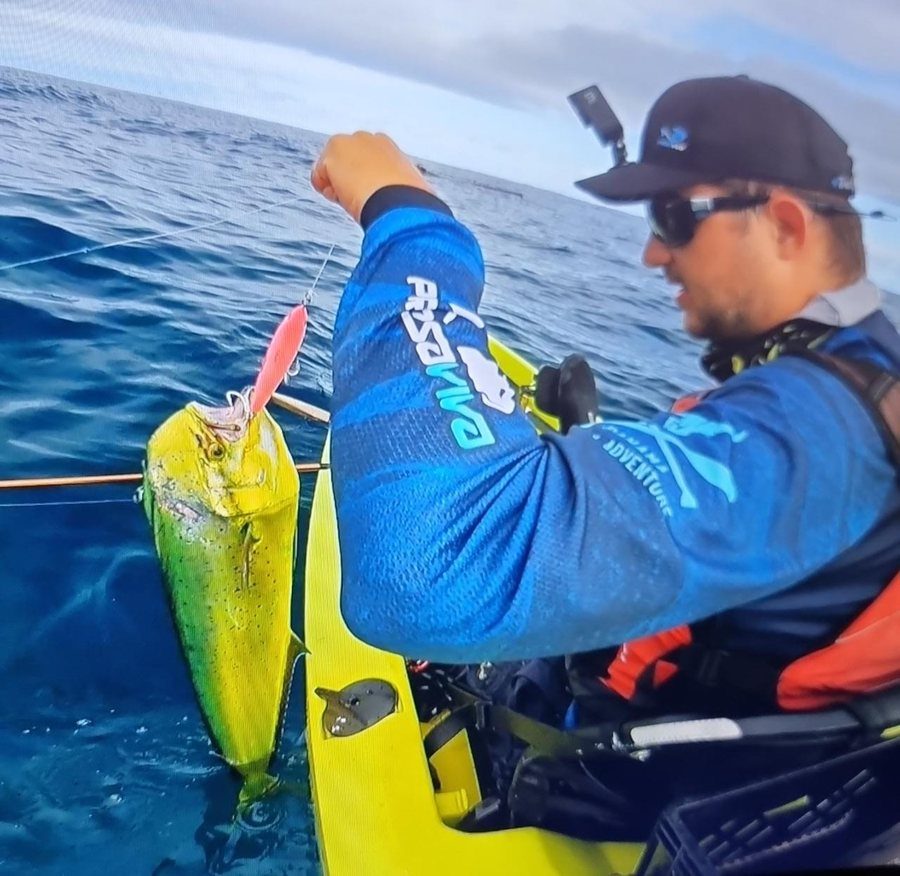
Thought of as an offshore fish, but here we find them yards off the rocks or just beyond the breakers on the sand. The acrobatics and the colour make them one of the memorable ones from a kayak.
Jack Crevalle
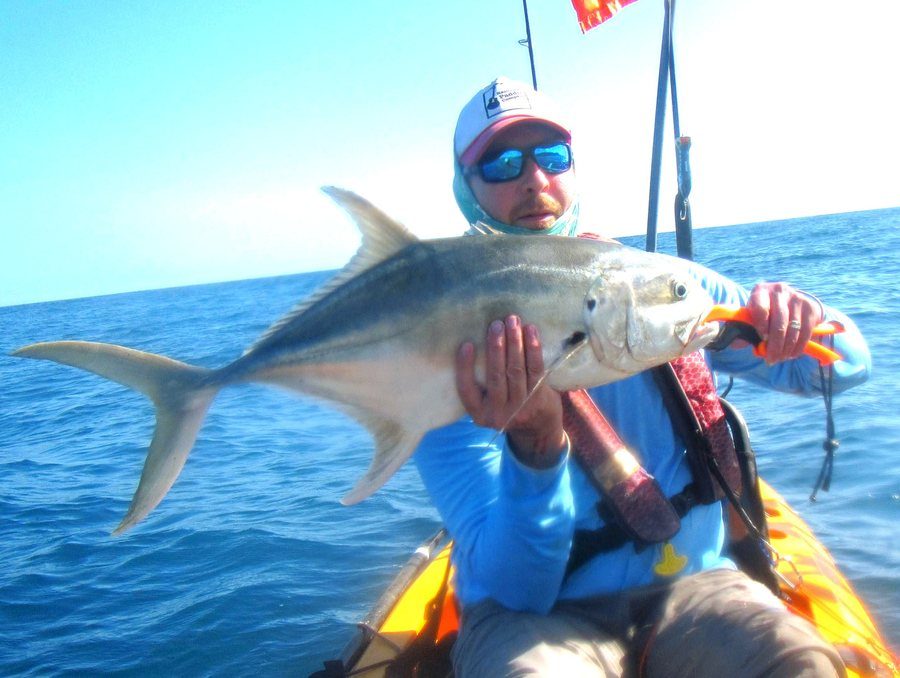
Brutes, and the best fun on top-water we have. A pack competing to reach your popper first is worth the trip on its own. When the big schools are in, the action does not stop.
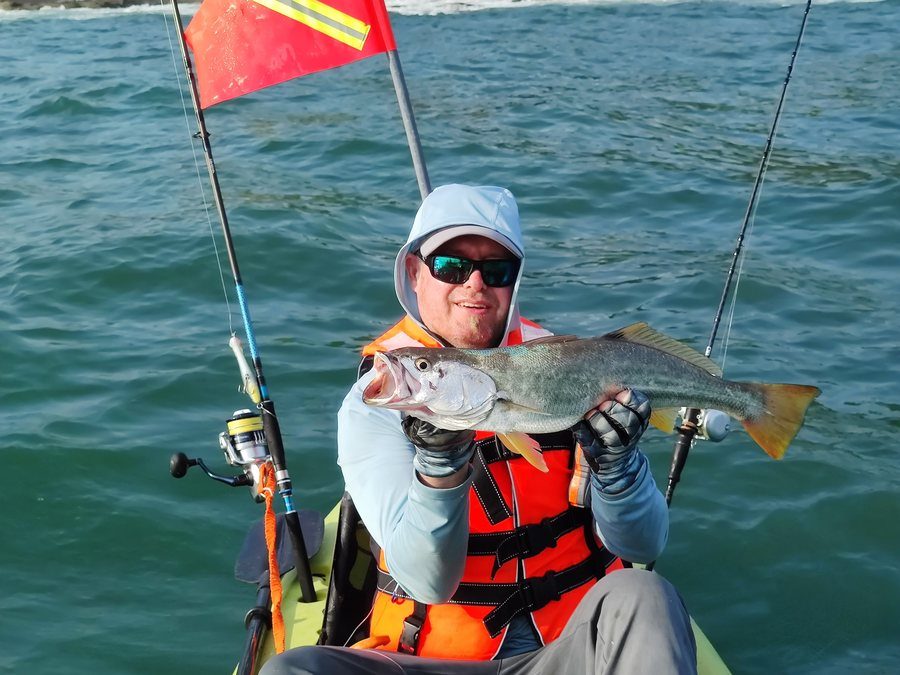
Corvina
They move inshore from January once the dry season sets in, and they come in waves — here one week, gone the next. Found on the nearshore reef, around rocky outcrops near sand, and where fresh water meets salt.
Mullet Snapper
When the cold water arrives it packs them into large shoals that rise to the surface seeking warmth. Huge patches of red visible on the water — you put the popper in the middle and hold on. One of the strangest sights of the season.
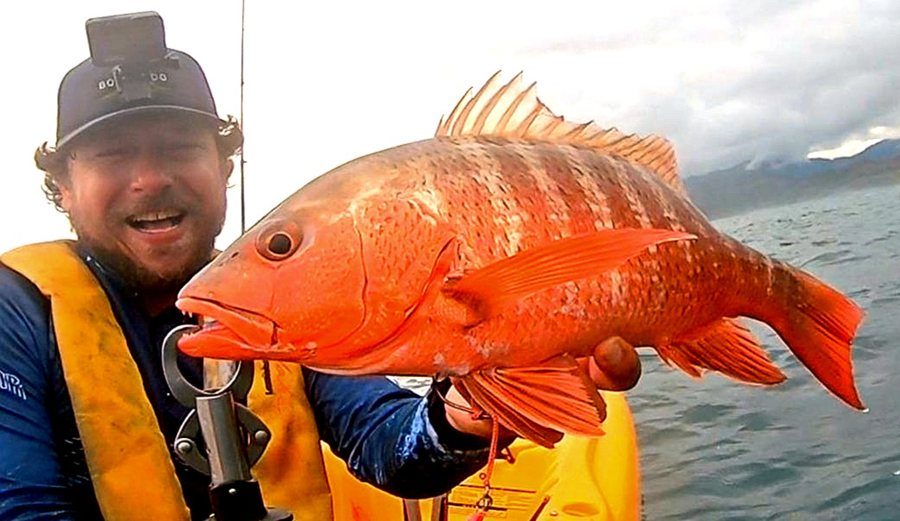
Yellowtail Snapper
The best-looking snapper on this coast and the best eating fish we have. They school on the reefs during the dry season upwellings, which brings them up from deeper water into range of light jigging gear.
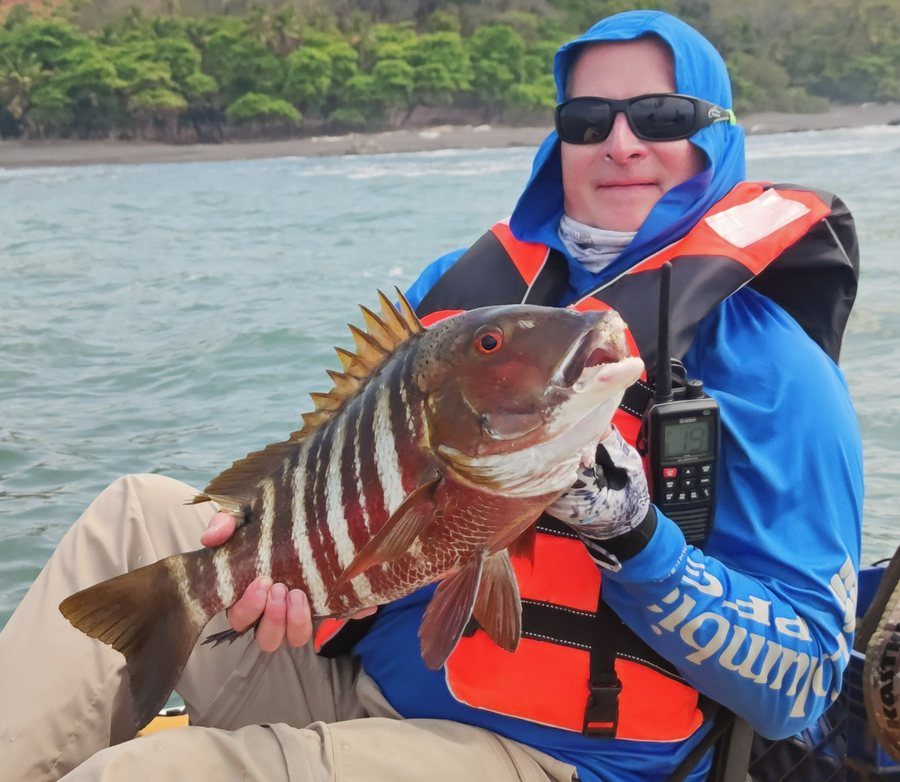
Rock Snapper
Opportunists that will take almost anything, which makes them one of the more obliging species for a visiting angler. Resident year round, anywhere from tight inshore to the edges of the offshore reef.
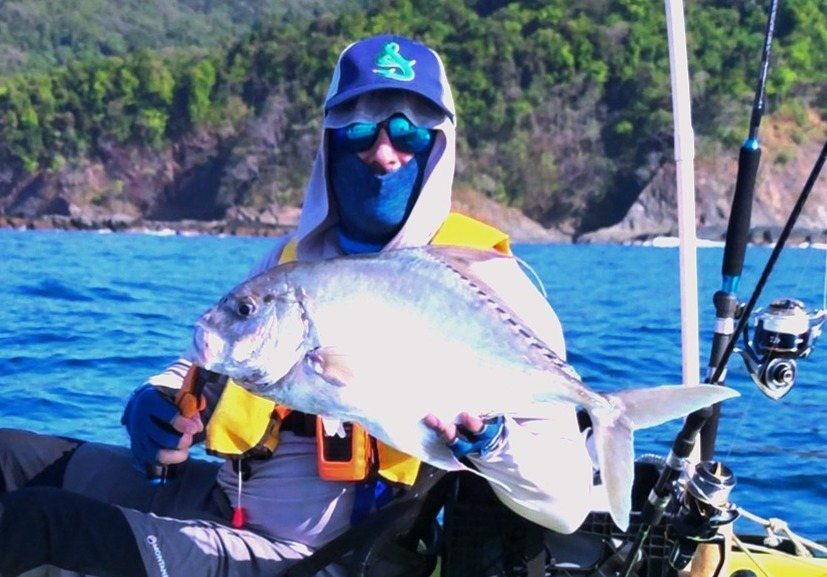
Pompano
Three varieties, all with the same habits — a little way offshore, around structure, anywhere from the bottom to high in the water column. Find a school on a reef and several in a row is normal.
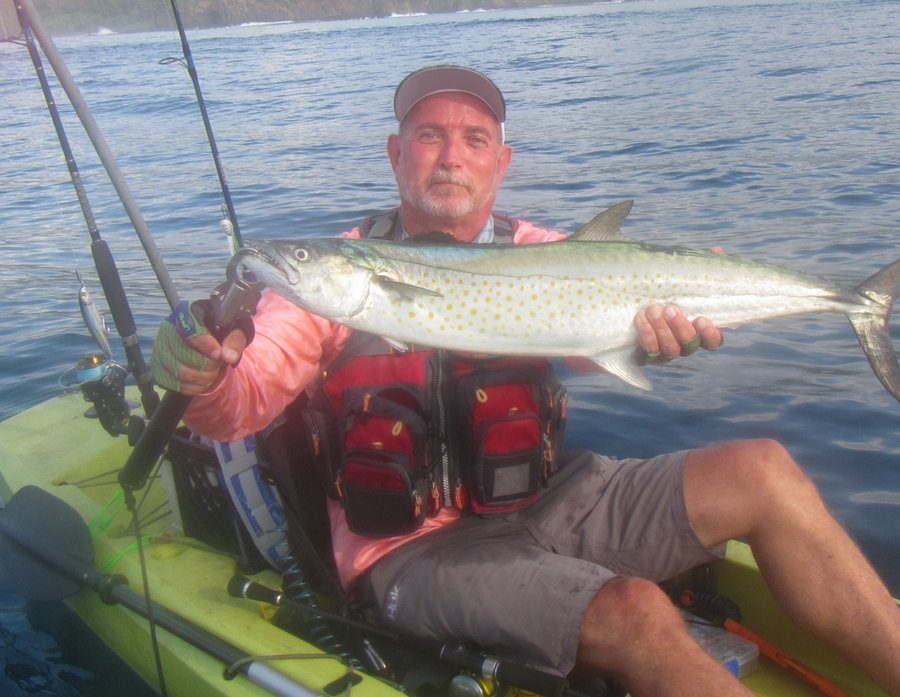
Sierra Mackerel
A regular catch and a kitchen staple. Blistering runs and a habit of leaping clear of the water, hooked or hunting. They favour slightly coloured water where they have the advantage — always worth a look if you want one.
Golden Trevally
Not common, but present every season, and the gold and the stripes make it a welcome fish. Their protruding mouthparts are built for rooting out crabs and shrimp, which makes them a difficult target. They can be caught.
Rainbow Runner
They move with the yellowfin and black skipjack shoals and turn up on the tuna marks on a favourable current. Not common, and they fight far beyond their size. The kind of surprise that keeps this coast interesting.
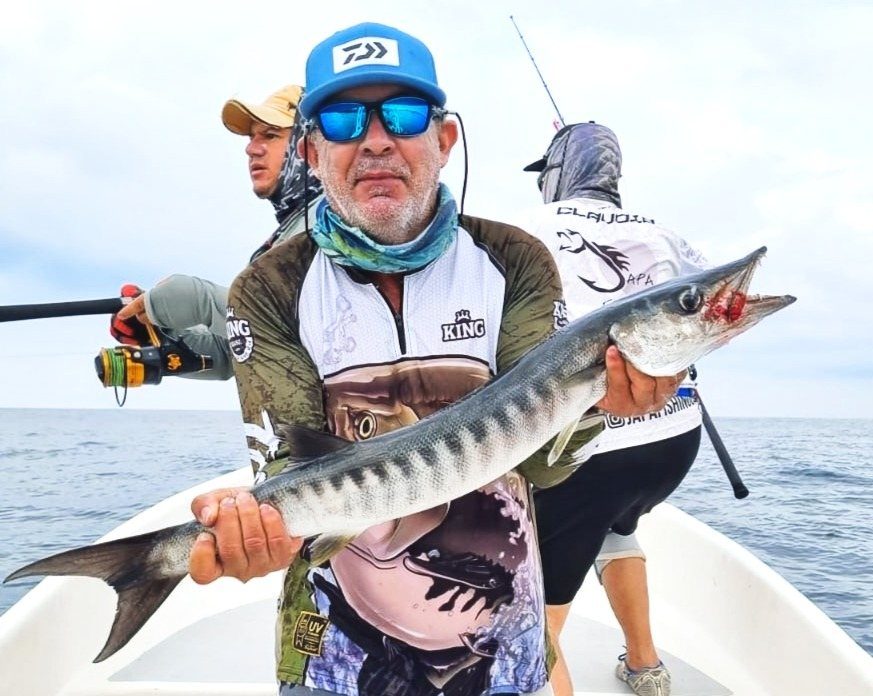
Pacific Barracuda
A run every season, appearing out of nowhere. Smaller than their Atlantic cousins, and with no ciguatera risk on this side. Good sport and very obliging when they are in the mood.
Giant Hawkfish
The largest of the hawkfish and a character. Orange and blue, fiercely territorial, resident right against the rock and willing to charge out at anything that comes close — including lures intended for fish ten times its size.
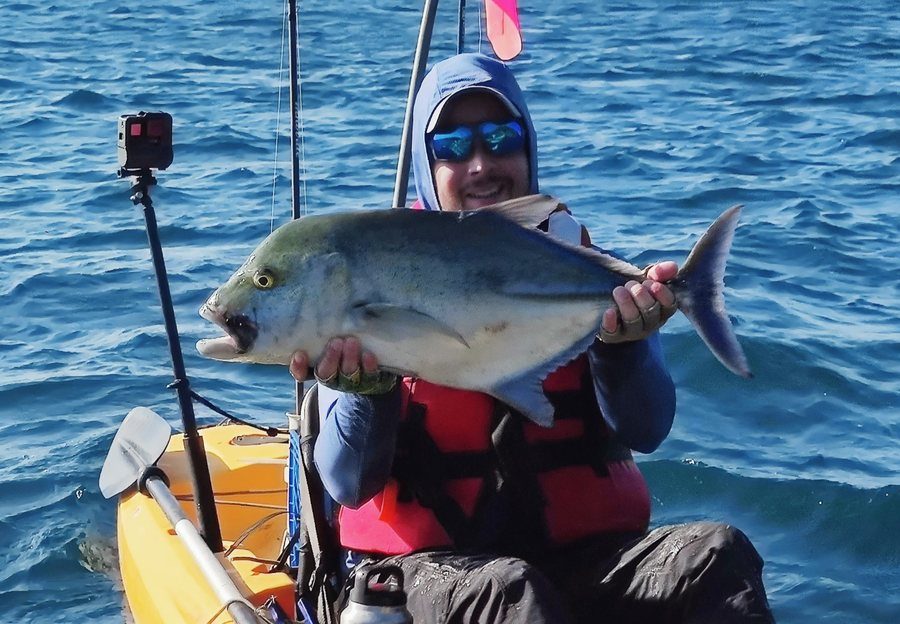
Bluefin Trevally
Electric blue fins and black spotting, holding tight to the rock and to the shallow reef. Aggressive and strong out of all proportion — a short, violent fight on light gear.
From the shore at night: snapper, nurse shark and big cubera have all come in the surf on bonito flesh. Large stingray, eagle ray, bagre and other sharks are present at points in the season.