A shoreline the road never reached.
Tembladera sits on the Pacific coast of Veraguas province, on the western flank of the Azuero Peninsula. There is no coastal road. Everything and everyone arrives by boat.
Two legs, about eight and a half hours.
Panamá City to Cambutal
Private air-conditioned minibus, collected from your hotel in the morning. The tarmac ends on the beach at Cambutal, on the southern tip of Azuero.
Cambutal to the lodge
You board the boat and run west into Veraguas. Phone signal drops away within twenty minutes. The coast turns to rainforest backed by mountain.
You will need a night in Panamá City on arrival and another on the way out. Fly into Tocumen (PTY).
Under two miles to a thousand metres.
Inside two miles the bottom drops through 500 metres and keeps going to a thousand. The 1,000 fathom line, which offshore boats elsewhere run for hours to reach, passes in front of the lodge.
The result is a mixed fishery at short range. Cubera and roosterfish hold on the rock. Yellowfin, sailfish and marlin move through on the migration route just outside.
April, May and June are the months when billfish traffic is heaviest.
Sand and headland
Long beach broken by rough ground, rocky points and promontories. Roosterfish country, and where the corvina come in from January.
Cliff and deep water
The coast adjoining Cerro Hoya National Park. Forested mountain falling into the sea, sheer rock, and deep water within a short paddle. The lodge sits outside the park boundary.
Reef and seamount
Reefs, seamounts, islands and river mouths. The amberjack and grouper marks, and where the tuna schools hold.
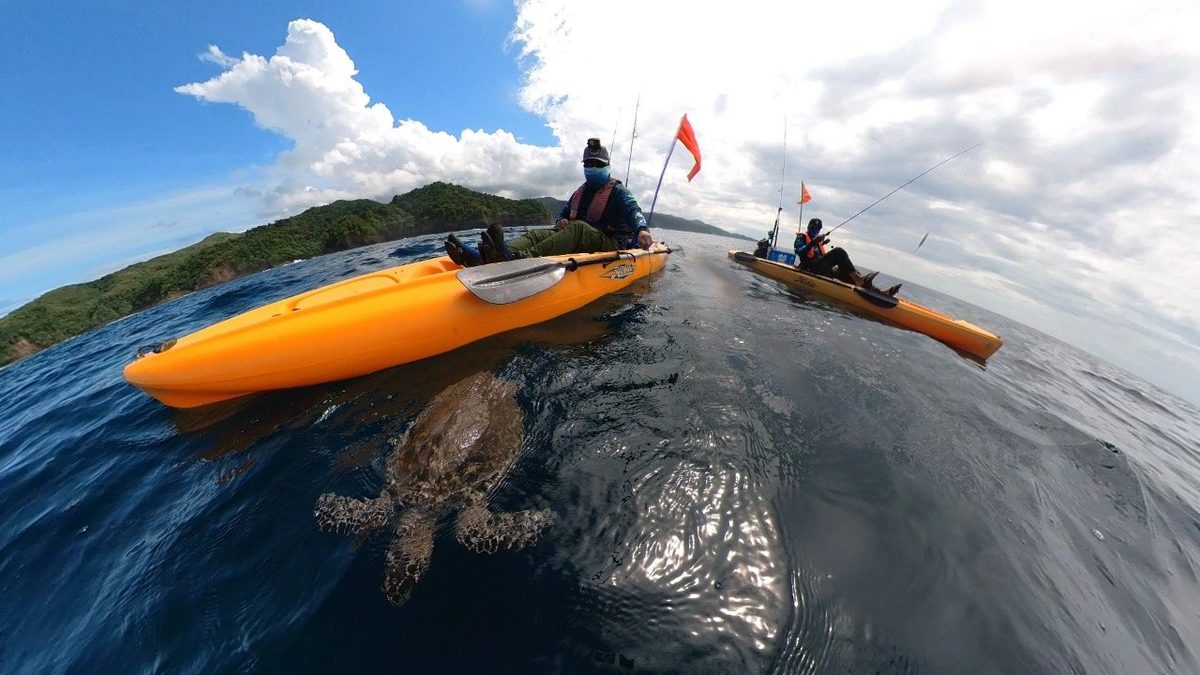
You will not be the only thing on the water.
Turtles, manta rays, whales and whale sharks pass through in season. On land, howler monkeys, iguanas and a range of mammals and insects that only survives where people have not arrived in numbers.
None of it is guaranteed in a given week. It is what an unpressured coast looks like.