Panga fishing.
Aboard, with greater range and the whole day covered. Same coast, same ground, a different way of working it.
What the panga buys you.
The panga reaches marks a kayak cannot: reefs and seamounts further out, and the edge where the blue water starts. It also lets you move between grounds mid-day without spending the angler.
It suits anglers who want to cover more water, fish deeper, or simply fish without the paddling. It is not a simplified version of the other option — it is a different kind of day.
Local captain and guide on every boat, every day.
Who it suits.
Anglers who want the remote ground without the physical demand of a kayak, and anglers who fish heavier tackle. Also anglers who already know this coast from a kayak and want to work the outside marks.
The scale is the same: small group, individual attention, no boat shared with strangers.
How it runs.
First light
Breakfast and out. Live bait is caught on the way, at the first stop.
Morning
Coast and near reef, or straight to the outside marks, depending on the day and the species you are after.
Lunch
Aboard or back at the lodge, depending on how far the day has gone.
Afternoon
Second session, often in deeper water. Back at sunset.
Five full fishing days across a six-night stay.
How it is fished.
Jigging
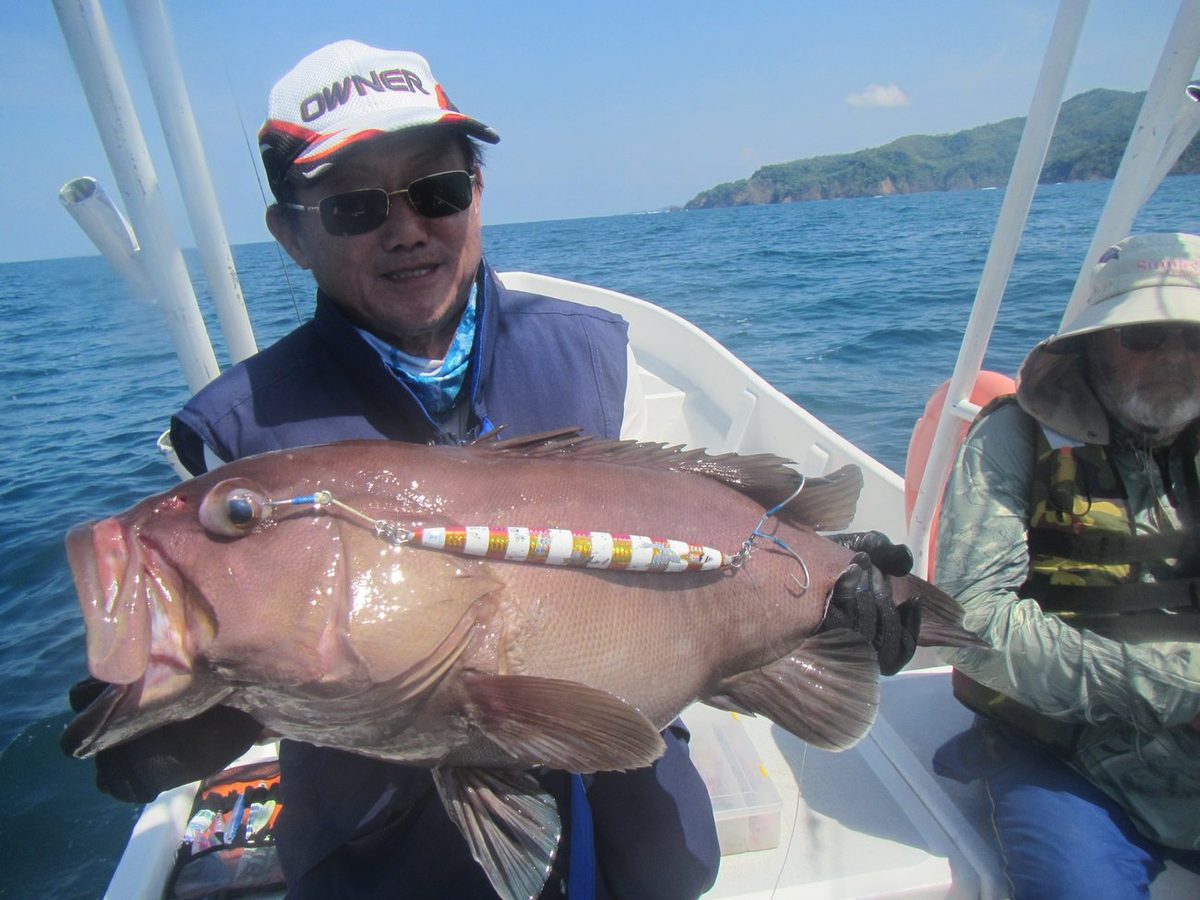
Speed and slow-pitch on the offshore reefs and seamounts. This is where the panga does what the kayak cannot.
Livebait
Slow-trolled bonito, blue runner and small jacks. The method for the big fish.
Popping
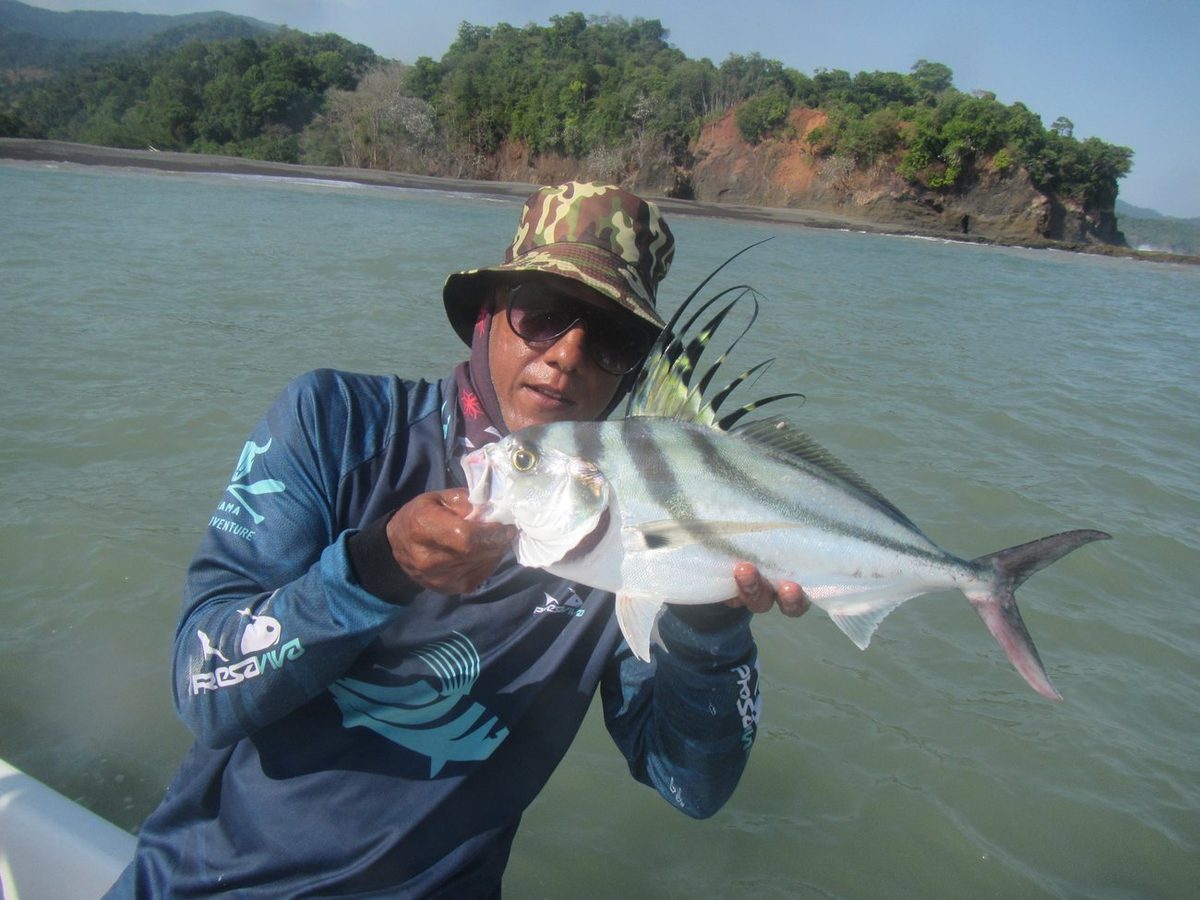
Top-water on the rock and over showing schools, with the boat setting up the cast.
Trolling
Divers and spoons between marks, using the run.
The boat.
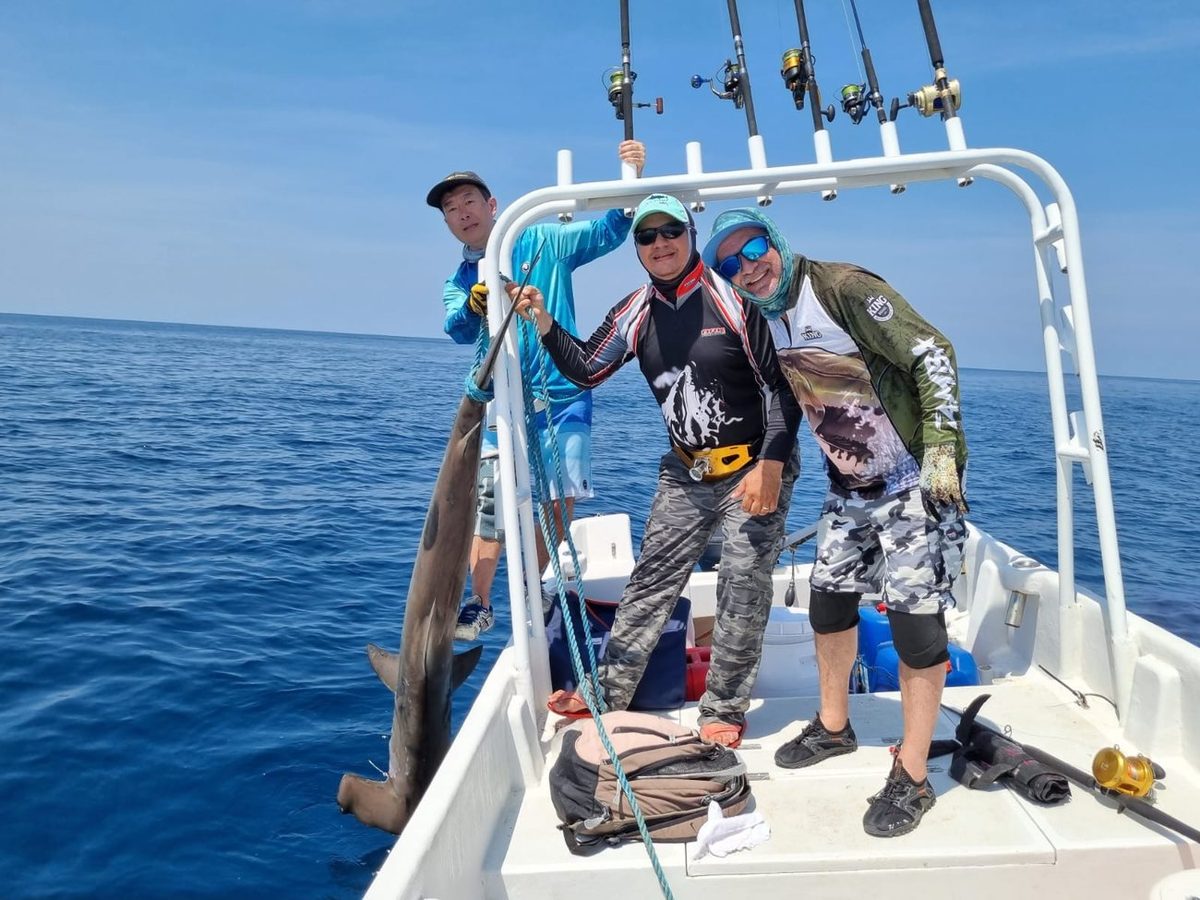
Super-pangas, the same boats that shadow the kayaks. Open boat, built for this coast and this sea, with a captain who knows the marks.
It is not a closed-deck boat and it has no tower. It is the vessel that works here.